


Cosmetic Industry in France: Market Outlook, Key Figures and Trends


The cosmetic industry in France remains a strategic pillar of foreign trade. Despite an unprecedented slight decline in exports in 2025 (€22.4 bn), the sector still holds a strong global position, with a trade surplus of +€17 bn.
By the end of this article, you will understand why the French cosmetics market remains strategic despite international tensions, and which indicators are worth watching through 2026–2030.
Definition: what is the cosmetic industry?
The cosmetic industry brings together all the players involved in the design, formulation, manufacturing, and commercialization of beauty and skincare products.
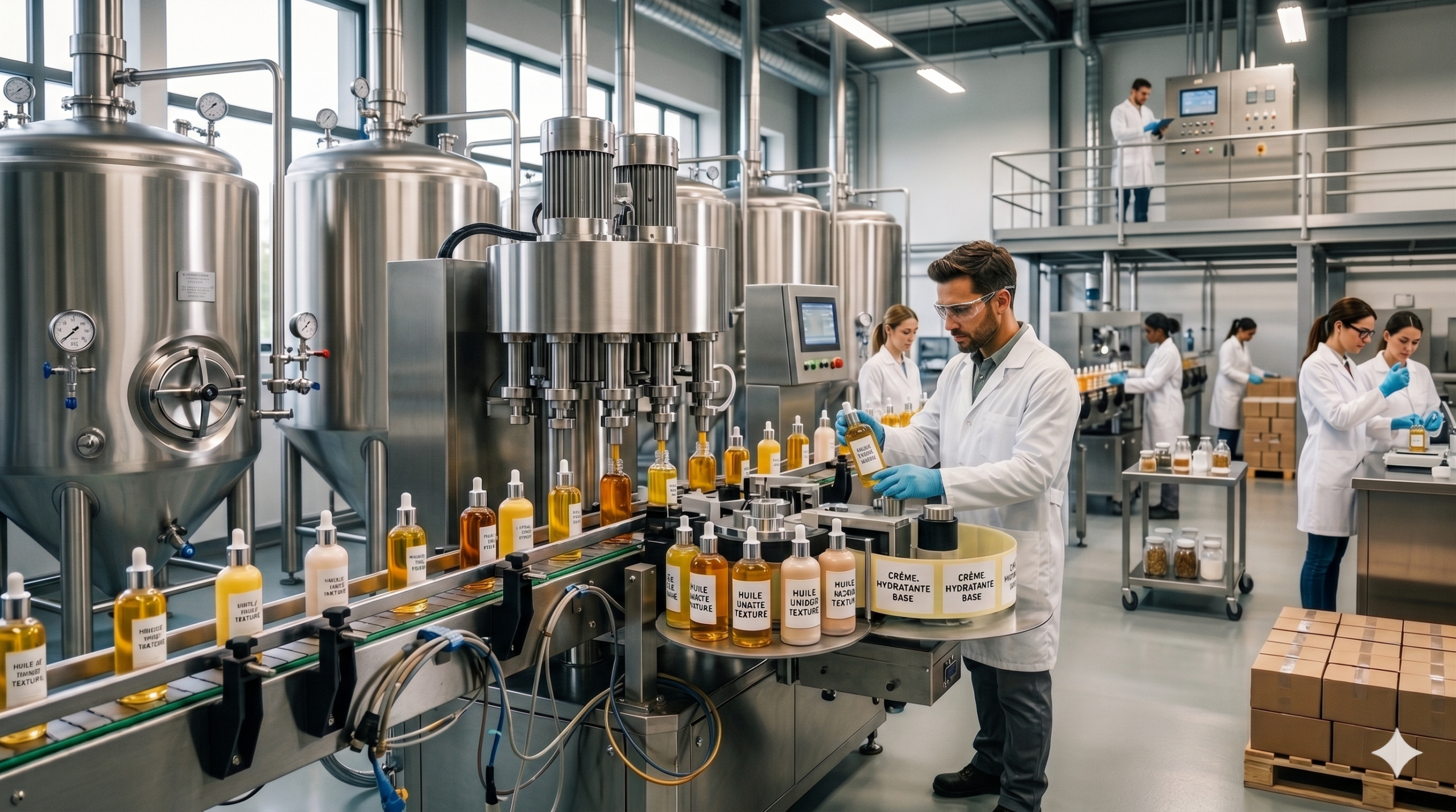
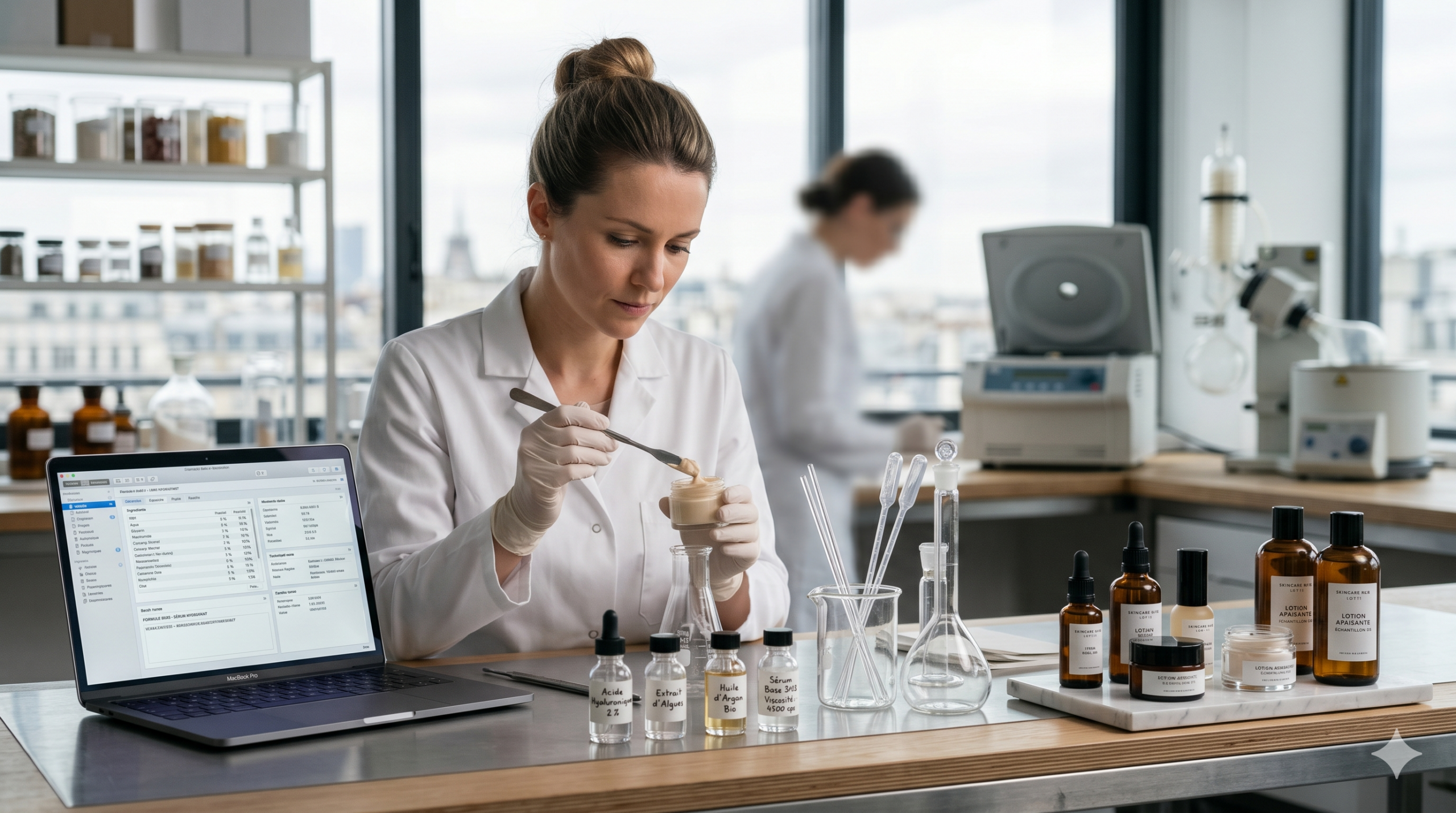
It relies on a complete ecosystem including brands, laboratories, universities, competitiveness clusters, ingredient suppliers, and cosmetic contract manufacturers.
In France, this ecosystem is one of the most structured in the world.
Key figures for the French cosmetics market
The cosmetic industry in France has long been one of the country’s strongest export sectors.
According to FEBEA (Fédération des Entreprises de la Beauté), cosmetics remained in 2025 the second-largest French exporting sector, behind aeronautics and ahead of wines and spirits.
2025 snapshot
| Indicator | 2025 data |
|---|---|
| Exports | €22.4 billion |
| Annual change | -0.1% |
| Trade surplus | +€17 billion |
| Sector ranking | 2nd French exporting sector |
| Structure | 85–90% SMEs / mid-sized companies |
The industrial base is made up mainly of SMEs and mid-sized companies, which account for nearly 88% of the sector’s players.
These figures confirm the strategic weight of the French cosmetics industry in foreign trade, despite a more tense international environment.
Christophe Masson, CEO of Cosmetic Valley, has emphasized this strength clearly:
« Cosmetics are a fast-growing market in which France has a real lead and a real reputation. »
This level of structuring helps explain the sector’s ability to absorb economic cycles and maintain a high level of innovation.
Source: FEBEA 2025 – Asterès market study
Exports: an unprecedented slowdown in 2025
While average annual export growth had been close to 7% over the last decade, 2025 marked a historic turning point.
According to FEBEA:
- exports fell by 0.1% (€22.4 bn vs €22.5 bn in 2024)
- the US market recorded a sharp decline
- this 0.1% change was the first contraction outside the pandemic period since 2008
- imports rose by 6% to €5.4 billion
Despite this slowdown, the trade surplus remained largely positive.
Emmanuel Guichard, General Delegate of FEBEA, explained:
« Despite the stagnation in total exports, the French cosmetics sector remains confident thanks to new opportunities opened up by free-trade agreements, with India and Indonesia for example. Despite the downturn in the US market, the sector remains resilient. […]. »
The industry therefore remains solid, but it now operates in a more constrained and tense international environment.
Made in France: a lasting strategic lever
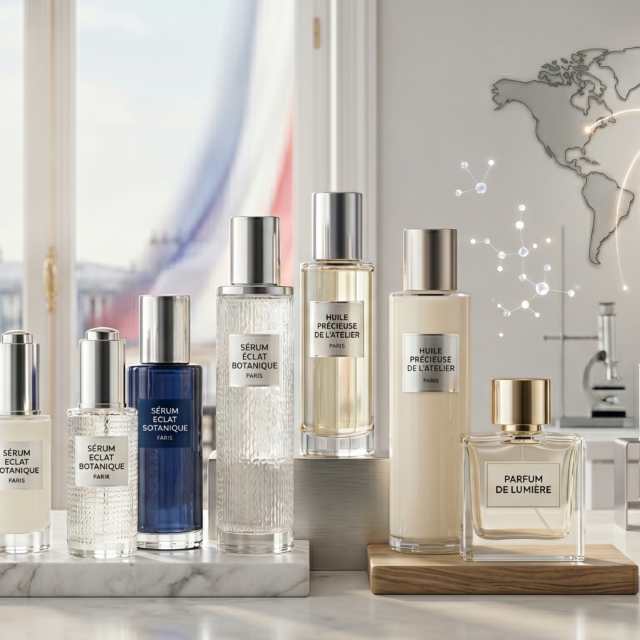
The Made in France positioning remains a strong differentiator.
Patrick O’Quin, former President of FEBEA, underlined this point clearly:
« The beauty sector is also a major driver of tourism appeal: tourists buy €3 billion worth of cosmetic products in France every year. »
The perceived value of the France label continues to reinforce desirability and international reach, because Made in France cosmetics are still associated with:
- high perceived quality
- regulatory safety
- formulation excellence
- industrial know-how
3 major trends shaping the cosmetics sector
As Bpifrance has observed, the French cosmetics sector is going through a deep transformation: more sustainable, more local, and more transparent.
Scandals linked to persistent pollutants have accelerated consumer vigilance.
For example, clean beauty is no longer a niche segment. It has become a cross-market expectation.
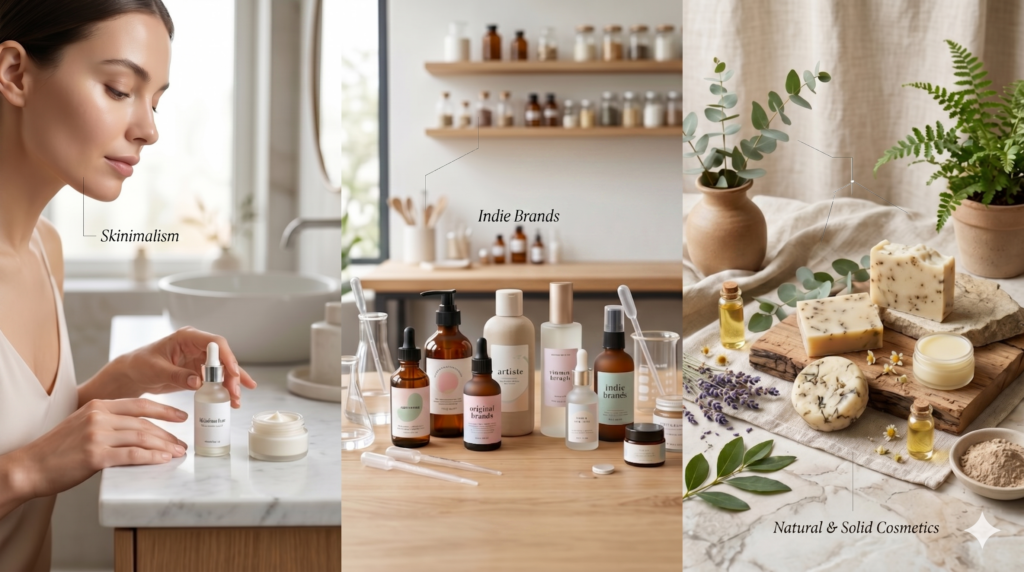
In this context, three major dynamics are reshaping the market:
Skinimalism: towards simpler routines
Skinimalism favors quality over quantity. It is built around:
- fewer products used every day
- more concentrated formulas
- reduced environmental impact
- a stronger focus on measurable efficacy
This approach supports multifunctional skincare and more advanced galenic development.
Indie brands: growing momentum in France
For indie brands, the FEBEA 2024 study shows strong recent growth, but still-fragile structuring:
- 33% generate less than €100,000 in revenue
- 21% generate between €100,000 and €500,000
- 20% generate between €500,000 and €1 million
- 22% generate between €1 million and €5 million
- 5% exceed €5 million
The French ecosystem is considered particularly favorable to their emergence, even if industrialization and international expansion remain challenging stages.
Naturality and solid cosmetics: towards structural growth
Natural, organic, and solid cosmetics continue to grow, with the global solid cosmetics market estimated at $7.6 billion in 2025, according to Statista.
This trend reflects:
- environmental expectations
- the demand for transparency
- the desire to reduce packaging
Naturality in cosmetics is part of a structured and standardized framework, including ISO 16128.
Read more on:
Clean Beauty
ISO 16128 in Cosmetics: Full Guide to How Naturality Is Calculated
Outlook and structural challenges
Despite the export slowdown in 2025, the cosmetics market in France still rests on solid fundamentals:
- a strong trade surplus
- a long-standing global position
- a dense industrial ecosystem
- sustained innovation capacity
Challenges through 2026-2030:
- greater geographic diversification of export markets, including India and Indonesia
- competitiveness against Asia
- a faster environmental transition
- stronger command of international regulatory frameworks, including China’s CSAR
Indicators to watch:
- changes in US exports
- the trade surplus
- growth among indie brands
- the share of solid cosmetic formats
- international trade agreements
The cosmetic industry in France remains strategic, but it now operates in a context of accelerated change.
Key takeaways
- France remained the second-largest French exporting sector in cosmetics in 2025
- Exports reached €22.4 billion in 2025 despite a slight decline
- The French cosmetic industry remains strategic despite the 2025 slowdown
- It relies on a structured scientific and industrial ecosystem
- Exports remain a major pillar
- Made in France continues to reinforce perceived value
- The sector is changing: sustainability, performance, and industrial structuring are becoming central
- International competitiveness is becoming a key issue
Conclusion
The French cosmetic industry remains a structured, export-driven, and innovative economic pillar.
It is evolving in a more constrained environment, but it still has strong advantages: know-how, a demanding regulatory framework, and a dense scientific ecosystem.
ALPOL Cosmetique is part of this ecosystem, supporting cosmetic brands in the structuring, formulation, and production of their skincare products within a controlled and compliant industrial framework.
Frequently asked questions about the cosmetic industry in France
Are you developing a cosmetic brand?
In a sector as structured as the cosmetic industry in France, industrial and regulatory control is a key success factor.
Contact ALPOL Cosmetique to structure your project within a secure industrial environment.
You might also be interested in
At the heart of responsible cosmetic innovation
For professionals seeking more information about how we work, our products or our support: visit our website or follow us on LinkedIn.