


How Private Label for Cosmetics Accelerates Range Development


Private label for cosmetics is often seen as a fast solution. Yet when it is structured with an expert industrial partner, it becomes a strategic lever to accelerate range creation, secure regulatory compliance, and optimize industrial investment.
By the end of this article, you will understand how private label for cosmetics helps reduce time to market without compromising quality, differentiation, or regulatory security.
What is private label for cosmetics?
Private label for cosmetics refers to a model in which a manufacturer develops and produces skincare or cosmetic products for a brand that markets them under its own name, without the manufacturer appearing to the final consumer.
Contrary to common assumptions, private label does not necessarily mean a standardized product. It can include a high level of customization in active ingredients, galenic forms, packaging, claims, and distribution areas.
Private label for cosmetics: practical advantages
Private label for cosmetics makes it possible to:
- share industrial infrastructure
- accelerate product launch
- access regulatory expertise immediately
- limit capital immobilization
- secure market launch
It becomes truly strategic when it is integrated into a long-term business vision.
Major strategic benefits for a brand
1. Accelerating product launch
Building an in-house laboratory requires significant investment in R&D, compliance, industrial equipment, and the recruitment of qualified experts.
By working with a structured private label skincare manufacturer, a brand can significantly reduce development timelines and reach the market faster.
2. Securing regulatory compliance
Cosmetic regulations are constantly evolving across markets such as Europe (CE 1223/2009), China (CSAR), United States of America (MOCRA), etc.
Integrated regulatory expertise helps secure:
- Product Information File structure
- claims validation
- international compliance
- ongoing regulatory monitoring
This is one of the strongest advantages of private label for skin care when the project is handled by a partner with real regulatory capabilities.
3. Accessing advanced technical expertise
An integrated R&D laboratory, ingredient monitoring, galenic expertise, and GMP-compliant industrial equipment are rarely available in-house for young or growing brands.
A structured private label model gives access to industrial capabilities that are immediately operational.
Private label vs in-house development: the economic trade-off
This is both an economic and structural choice.
| In-house development | Structured private label |
|---|---|
| Heavy investment | Shared costs and infrastructure |
| Longer timelines | Faster product launch |
| Full control but costly | Collaborative project steering |
| Responsibility borne fully by the brand | Responsibility defined contractually and managed jointly |
| Need to recruit multiple experts | Integrated expertise already available |
| Internal regulatory watch required | Specialized regulatory support included |
Private label for cosmetics becomes particularly strategic when a brand wants to:
- test a new segment
- launch a new range quickly
- explore a new galenic form
- industrialize without immobilizing capital
How does private label for cosmetics work?
A high-performing private label for cosmetics model relies on a structured process:
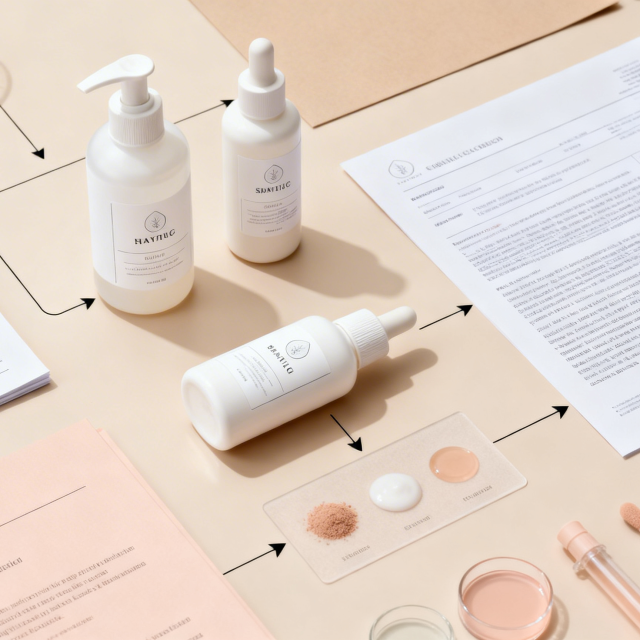
- Analysis of needs, positioning, and market objectives
- Proposal of adaptable existing formulas or specific development
- Compatibility testing, stability testing, and regulatory review
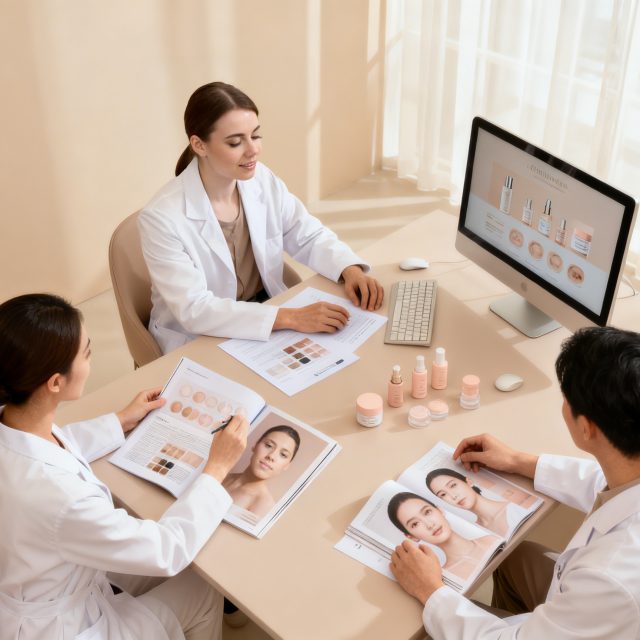
- Controlled industrial scale-up
- Filling, packaging, and market launch
At ALPOL Cosmetique, support can cover:
- upstream market review when needed
- formulation and active ingredient sourcing
- packaging selection
- regulatory compliance
- quality follow-up
Collaboration is central. A cosmetic private label partner co-builds the project with the brand so that the brand can preserve its identity, positioning, and strategic direction.
Risks to anticipate and how to control them
Private label for cosmetics can become risky if it is poorly structured.
Risk 1: lack of differentiation
→ Solution: customize active ingredients, claims, and product positioning
Risk 2: excessive dependency
→ Solution: define a clear contractual relationship and strategic steering process
Risk 3: regulatory fragility
→ Solution: integrate regulatory affairs from the earliest design stage
Risk 4: industrial inconsistency
→ Solution: rely on processes aligned with Good Manufacturing Practices (GMP)
A successful private label project depends on transparency, method, and documentary rigor.
How to know whether private label is right for your project
Private label for cosmetics is especially relevant if:
- you do not have GMP-compliant industrial facilities
- you want to launch within 6 to 12 months
- you target several regulatory markets
- you want to limit financial immobilization
- you are exploring a new product segment
It becomes less relevant if your strategy relies on full in-house industrial integration.
For brands asking how to start a private label skincare brand, this is often the key decision point: choosing between speed and shared industrial leverage on one side, or full internal integration on the other.
ALPOL Cosmetiqueʼs strategic approach
ALPOL Cosmetique positions itself as a strategic industrial partner in cosmetics and dermo-cosmetics, not as a simple laboratory or manufacturer.
Its support is built on five pillars:
- full-service or à la carte partnership
- Made in France innovation and customization
- regulatory control and international compliance
- specialized expertise
- access to advanced industrial facilities
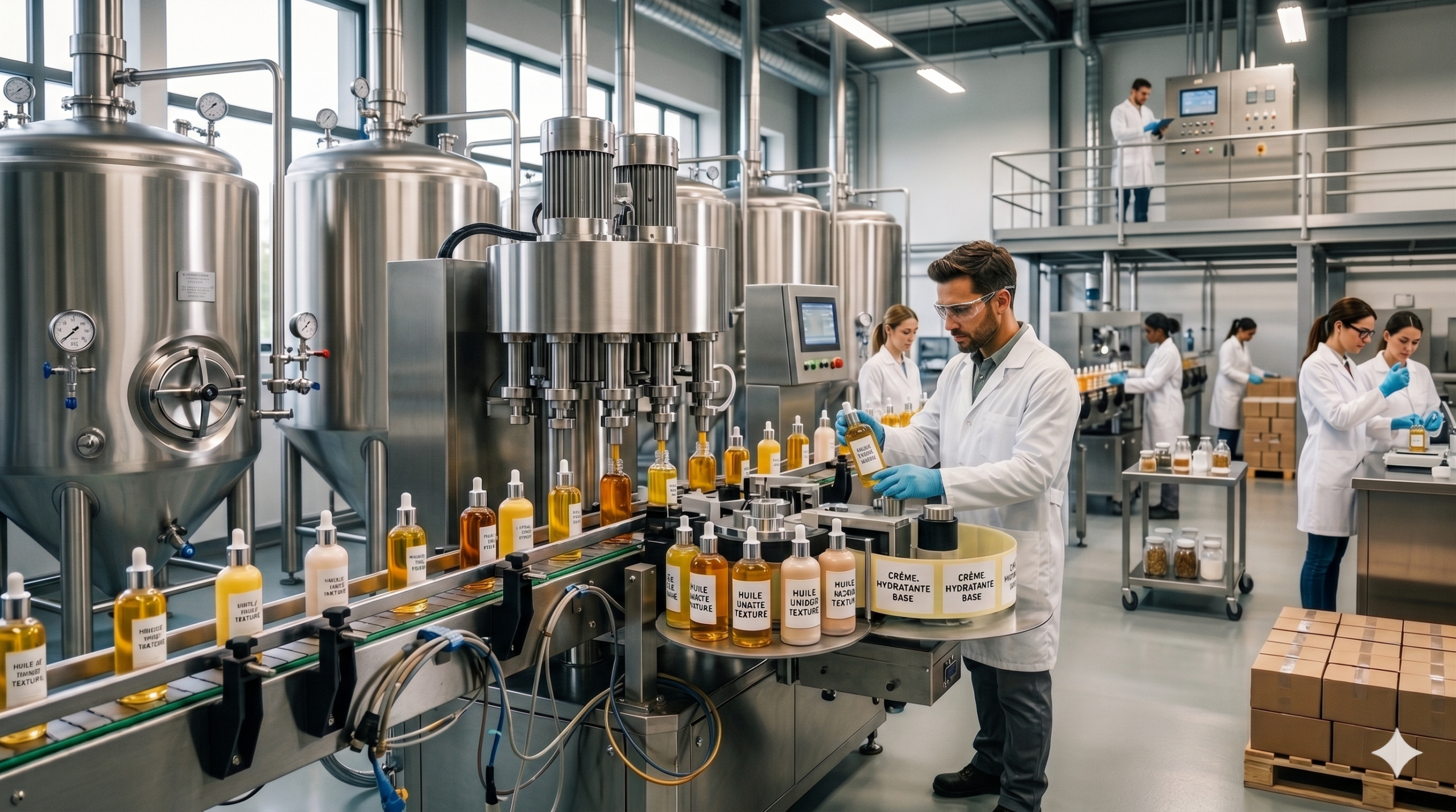
R&D, marketing, production, quality, purchasing, and regulatory affairs work in a coordinated way to integrate innovation into each project.
Post-market cosmetovigilance helps maintain compliance over time.
The objective is not only to produce. It is to secure the projectʼs industrial and regulatory performance from development to market launch.
This is what makes the difference between a basic supplier model and a true private label cosmetics supplier able to support long-term brand growth.
Private label for cosmetics in 5 key points
- It accelerates product development.
- It shares industrial infrastructure and costs.
- It integrates regulatory security into the process.
- It allows formula and packaging customization.
- It helps secure market launch.
FAQ about cosmetic private label
Are you developing a new range?
Private label for cosmetics can become a strategic accelerator when it is managed with method.
Contact ALPOL Cosmetique to structure your product development within a controlled and high-performing industrial framework.
You might also be interested in

At the heart of responsible cosmetic innovation
For professionals seeking more information about how we work, our products or our support: visit our website or follow us on LinkedIn.